
Common Badminton Injuries and How to Prevent Them
Badminton has a reputation as a gentle game, the sort of thing you play in the garden at a family barbecue. Anyone who has played a proper match knows better. It is one of the most explosive stop-start sports there is: a flurry of lunges, jumps, twists and sudden changes of direction, repeated for an hour or more. That constant acceleration and braking is what makes it such good exercise, and also what puts the body under load. The good news is that most badminton injuries are preventable, and the habits that keep you off the treatment table are simple to build.
Most of what protects you comes down to three things: a proper warm-up, sensible kit (above all the right court shoes), and clean technique that spreads the effort through your whole body rather than hammering one joint. Get those right and you can play for decades. Let us start with where things tend to go wrong.
The usual trouble spots: most badminton injuries cluster around the ankle, knee and shoulder, with the elbow and wrist close behind.
What are the most common badminton injuries?
They split into two groups: sudden (acute) injuries, where something gives way in a single movement, and overuse injuries that creep up over weeks of repeating the same action.
Ankle sprains
The classic acute badminton injury. You lunge for a net shot or land awkwardly after a jump, the foot rolls, and the ligaments on the outside of the ankle take the strain. It is the single most common reason a club player hobbles off court. Good footwear and strong, mobile ankles are your best defence.
Achilles tendon trouble
The Achilles takes a pounding every time you push off explosively, and it is a particular worry for players returning to the game in their thirties and beyond. Problems range from a nagging tendinopathy to, at worst, a rupture. A thorough warm-up matters most here, because a cold tendon is a vulnerable one.
Knee injuries
Two main culprits. The first is patellar tendinopathy, better known as "jumper's knee", an overuse ache just below the kneecap from repeated jumping and landing. The second is the twisting injury: plant the foot, change direction hard, and the knee can be wrenched, which in a nasty case means ligament or cartilage damage. Preventing a knee injury in badminton is mostly about landing softly, keeping the knee tracking over the toes, and not letting tired legs collapse into big, uncontrolled pivots.
Shoulder and elbow
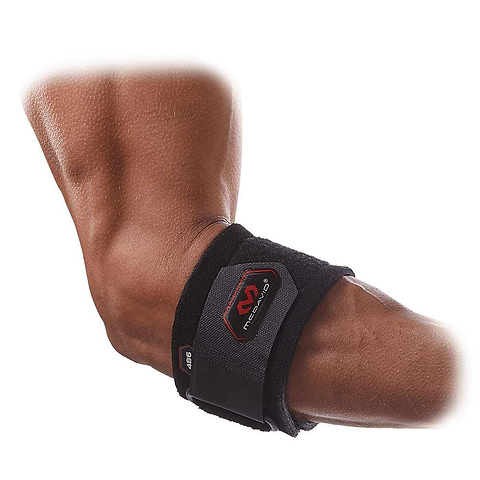
These are the overhead injuries. Smashing and clearing again and again loads the rotator cuff in the shoulder, while the repeated gripping and snapping of the forearm can inflame the tendons at the elbow, producing tennis elbow (on the outside) or golfer's elbow (on the inside). Both tend to be about volume and technique rather than one bad moment.
Wrist, back and the small stuff
A fast, flicking wrist is central to badminton, so wrist sprains are common when the grip or timing is off. The arched position of a big smash can tweak the lower back, and most players meet the odd blister or bout of cramp along the way. Minor, but worth heading off.
How to warm up before badminton
If you do only one thing from this article, do this. Walking straight onto court cold and firing off a smash is how tendons get hurt. A good warm-up takes ten to fifteen minutes and has three stages.
Start with a pulse raiser: five minutes of light jogging, skipping, side shuffles and gentle footwork to lift the heart rate and get blood into the muscles. Follow with dynamic stretches, which means moving the joints through their range rather than holding a position: leg swings, walking lunges, hip circles, arm circles and shoulder rotations, plus some wrist and ankle mobility. Save the long, static "hold it for thirty seconds" stretches for after you play, not before. Finally, do a movement-specific knock-up: start gently with soft clears and net shots, and build up to full power only once you are moving freely. Those few minutes are the cheapest injury insurance in the sport.
How to prevent injuries in badminton
Beyond the warm-up, a handful of everyday habits do the heavy lifting.
Wear proper court shoes
This is the big one, and the mistake beginners make most often. Running trainers are built to roll you forwards and sit you up on a cushioned heel, which is the opposite of what badminton needs. A good pair of non-marking badminton shoes sits you low to the ground with strong lateral support, so the foot is far less likely to roll in a lunge, and a gum sole grips an indoor court so you are not skidding into awkward positions. Replace them once the cushioning and grip wear down rather than squeezing out an extra season.
Use kit that suits your body
A surprising amount of elbow and shoulder trouble is really an equipment problem. A racket that is too heavy or too head-heavy for you forces the arm to do more work on every shot, so if your elbow grumbles it is worth choosing the right racket and considering a lighter, more forgiving racket. The right grip size lets you hold the handle relaxed, which keeps strain off the wrist and forearm, and sensible string tension matters too: very high tension is punishing on the arm, so most club players are better off a little lower. None of this is about buying the priciest gear; it is about kit that fits how you actually play.
Let your whole body do the work
Power in badminton should flow up from the legs, through a rotation of the hips and trunk, and out through the arm at the last moment. Players who try to generate everything with the arm alone are the ones who end up with sore shoulders and elbows. Keeping the wrist fairly neutral through most strokes, taking small adjustment steps rather than lunging wildly, and landing softly with the knees bent all spread the load so no single joint takes the full hit.
Build a little strength, and cool down
You do not need to live in the gym, but a couple of short sessions a week of calf raises, glute and hamstring work, and some shoulder and core exercises make the body far more resilient. After you play, do your static stretching then, rehydrate, and rest properly between sessions. Fitness built gradually protects you; too much too soon is how overuse injuries start.
When to rest and when to get it checked
Niggles are part of any sport, and a day or two of rest with a bit of ice usually settles the minor ones. The sign to pay attention to is pain that keeps coming back, swelling that will not go down, or anything that changes how you move. Pushing through those is how a small problem becomes a long lay-off, so it is worth seeing a physiotherapist or GP rather than hoping it clears. This is general guidance for staying fit to play, not a diagnosis.
Badminton is one of the most age-friendly sports around, something you can enjoy from childhood into retirement. The players who keep going for decades are rarely the ones who never feel a twinge; they are the ones who warm up every time, wear the right shoes, listen to their bodies and play smart. Build those habits now and the game will keep giving back for a very long time.


