
How fast does a shuttlecock go? Badminton's fastest and slowest projectile
Pick up a shuttlecock and it feels like almost nothing: a thumbnail of cork and a little crown of feathers, light enough to drift off a table in a draught. Then you watch an international doubles rally and that same feather-light object is fired across the net faster than a Formula 1 car on the straight. No other piece of sports equipment lives such a double life, and it is the reason badminton looks the way it does. So let us settle the question that fans and curious newcomers keep asking: how fast does a shuttlecock actually go?
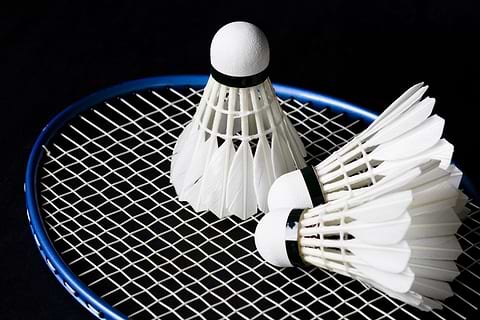
The short version is that the shuttlecock is comfortably the fastest projectile in any racket sport, and yet it also slows down more dramatically than anything else you can hit. Understanding why turns a quiet mystery into one of the most satisfying things about the game, whether you play twice a week at your local club or you are still deciding which feather and nylon shuttles to buy for the garden. It is also, quietly, one of the many reasons badminton is so worth playing.
How fast does a shuttlecock go?
At the very top end, the answer is genuinely astonishing. The official Guinness World Record for the fastest badminton hit belongs to India's Satwiksairaj Rankireddy, who sent a shuttle off his strings at 565 km/h (about 351 mph) at a Yonex testing facility in Soka, Japan, on 14 April 2023. That measurement was taken in controlled conditions with an ultra high speed camera, but it gives you the ceiling: this is a garden toy travelling faster than a passenger jet at take-off.
Real matches are a little tamer, because the shuttle is struck while it is already moving rather than teed up in a lab. Even so, elite players routinely produce smashes recorded somewhere in the region of 300 to 420 km/h. The power comes from a whip-like chain of leg drive, hip and trunk rotation and a last-instant snap of the forearm, all transmitted through the right racket. A stiff, head-heavy frame with a thin, high-tension string bed acts like a trampoline for that energy.
What is the average speed of a shuttlecock?
Here a single headline number is misleading. A shuttle that leaves the strings at 400 km/h does not arrive at your opponent at anything like that speed. By the time it has crossed the net it may have shed two thirds or more of it, and over a whole rally, with clears floating up and drops dying at the net, the average is a tiny fraction of the record figure. So "how fast does a shuttlecock go" has two honest answers: blisteringly fast for a split second, then slower than almost any ball in sport.
Is a shuttlecock faster than a tennis ball?
Off the racket, it is not even close. The fastest recorded tennis serve, hit by Australia's Sam Groth, was 263.4 km/h. The fastest badminton hit is more than double that at 565 km/h. So yes, a shuttlecock is faster than a tennis ball, and faster than a golf ball, a cricket ball or a hockey puck at their respective records too.
But this is the twist that makes badminton unique. A tennis ball is roughly spherical and heavy, so it holds its speed and skids through the air. A shuttlecock is the opposite. It decelerates so violently that a shot which was doing 400 km/h can be gently tapped back a heartbeat later. Badminton is therefore both the fastest racket sport and, moment to moment, one of the most touch-based. The same rally can contain a bullet and a whisper.
Why the shuttlecock slows down so dramatically
The secret is drag, and the shuttle is built to create as much of it as possible. Notice that a shuttle always flies cork-first: however you hit it, it flips within a fraction of a second so the heavy base leads and the feathers trail behind. That open, cone-shaped skirt of feathers is essentially a tiny parachute. It grabs the air, creates enormous resistance and bleeds off speed at a rate no ball can match.
This is why the flight path is so distinctive: a steep, arcing curve rather than the flat trajectory of a tennis shot. It is also why string choice matters more than beginners expect, because a thinner string at the right tension transfers energy more crisply at the moment of contact. If you have ever wondered where to set yours, our string tension guide is a good place to start, and our racket buying guide explains how frame stiffness and balance play into the same equation.
How many feathers are in a shuttlecock?
A standard feather shuttlecock has exactly 16 feathers, fixed into a rounded cork base and overlapping to form that cone. The feathers are traditionally taken from the wing of a goose (or sometimes a duck), and crucially they all come from the same wing, so they curve the same way. That uniform curve makes the shuttle spin steadily in flight, which keeps it stable and true. The whole thing weighs only around 4.7 to 5.5 grams, which is why a puff of wind can ruin an outdoor game and why serious play happens indoors.
Are feather or plastic shuttlecocks better?
Neither is simply better; they are built for different jobs. Feather shuttles give the crisp, sharp deceleration and delicate feel that tournament players want, but they are fragile and can break in a single hard rally. Nylon (plastic) shuttles are far more durable and easier on the budget, with a slightly flatter, more forgiving flight that suits beginners, juniors and busy club nights. Many players learn on nylon and move to feather as their control improves. If you are weighing it up, our guide on which shuttlecock to choose walks through speed ratings and when each type makes sense.
Why is it called a shuttlecock?
The name is centuries older than the modern sport. "Shuttle" comes from the back-and-forth motion of a weaver's shuttle darting across a loom, which is exactly what the object does as it flies to and fro over the net. "Cock" refers to the feathers, which reminded early players of the plumage of a rooster. The two halves stuck together in the old parlour game of battledore and shuttlecock, where players simply tried to keep it airborne with wooden bats, long before nets, courts or scoring arrived. You will still hear it shortened affectionately to "the shuttle", or in some corners of the world, "the birdie".
The strangest object in sport
So how fast does a shuttlecock go? Fast enough to break records that dwarf every other racket sport, then slow enough, an instant later, to be caressed into an untouchable net shot. That contradiction is baked into 16 goose feathers and a lump of cork, and it is the engine of everything that makes badminton thrilling to watch and absorbing to play.


