
How to Score in Badminton: The 21-Point System Explained
Badminton looks simple from the sofa: one side hits the shuttle, the other hits it back, and eventually someone misses. Yet the moment you keep score, questions pile up. Does a point only count when you serve? What happens at 20-20 when nobody will budge? And why do good players glance at the scoreboard before choosing which side to stand on? If you have ever wanted to know how to score in badminton properly, this piece clears it up.
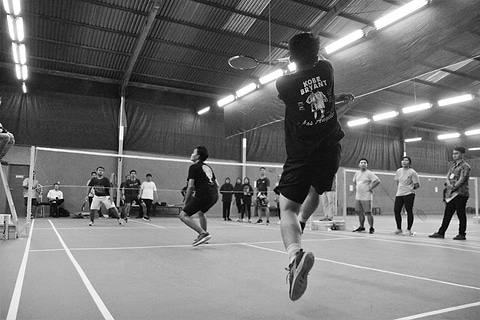
How does badminton scoring work?
Modern badminton uses what is called rally point scoring. The idea is refreshingly straightforward: whoever wins the rally wins the point, no matter which side served it. Win the exchange and the score ticks up in your favour. Lose it and it goes to your opponent. There is no waiting for your turn to serve before you are allowed to score.
That is the whole engine of the game. Every single rally is worth exactly one point to somebody. Whether you have just picked up a racket for the first time or you play in a club league, the counting works the same way, in singles and in doubles alike.
How to score in badminton: winning a game
A game is played to 21 points. To win it, you also need to be at least two points clear of your opponent. So 21-19 wins the game, but 21-20 does not, because that is only a one-point lead.
Most games never reach that awkward stage. Somebody edges ahead, keeps their nose in front, and closes it out at 21. The tension arrives when the scores stay locked together near the top, which brings us to the question a lot of new players ask.
What happens at 20-20?
If the score reaches 20-20, the game does not simply end at 21. Play continues until one side manages to build a two-point gap. That means the game can stretch to 22-20, 23-21, 24-22 and so on. To stop a rally going on for ever, there is a hard ceiling: the first side to reach 30 wins, even with only a one-point lead. In practice that means at 29-29 the very next rally settles it, a genuine sudden-death point that can decide a whole match. Reaching 30 is rare, but when it happens the hall tends to fall silent.
Winning the match: best of three games
One game is not a match. Badminton is played best of three, so you need to win two games to take the contest. Lose the first, win the second, and it all comes down to a deciding third.
A few practical details sit on top of this. The side that wins a game serves first in the next one. Players swap ends after each game, and in the deciding third game they change ends again once one side reaches 11 points, so neither player is stuck facing an awkward draught or a bright hall light for too long. There is also a 60-second break when the leading score first hits 11 in a game, and two minutes between games to towel off and regroup.
Can you only score on your serve in badminton?
No, and this is where a bit of history helps. For well over a century, badminton did work that way. Under the old system, only the serving side could win a point. If you were receiving and won the rally, you did not score; you simply earned the right to serve next. Men's games were played to 15 points, and there were fiddly "setting" rules that let players extend the game when the score drew level near the end.
The trouble was that matches could drag unpredictably, which made life hard for television scheduling and for spectators trying to follow the drama. So in 2006 the sport's governing body, now the Badminton World Federation, switched everyone to the 21-point rally system we use today. It was faster, easier to follow, and every rally suddenly mattered. If you have heard an older player insist that you can only score on serve, they are remembering a genuine rule, just one that has been retired for the best part of two decades.
Serving sides: how the score tells you where to stand
Here is a neat trick that confuses beginners and then, once it clicks, never troubles them again. The server's score decides which service court they serve from. When your score is an even number (including zero), you serve from the right-hand service court. When it is odd, you serve from the left. Your position, in other words, is written into the scoreboard.
This matters most in doubles, where partners rotate and it is easy to lose track of who should be where. If you are unsure mid-game, just look at the score: even means right, odd means left. It is also worth remembering that the shuttle itself is central to a clean rally, so a shuttle that flies true, whether feather or a good nylon, keeps rallies honest and scoring fair. If you are curious about the difference, the shuttle guide is a useful primer.
The big change: the new 3x15 system from 2027
Just as you have got the 21-point system straight, the sport is about to move the goalposts, gently. After years of trials and debate, the Badminton World Federation confirmed at its 2026 Annual General Meeting that international badminton will adopt a new "3x15" scoring system, taking effect from the first week of January 2027.
The headline is that games will be played to 15 points instead of 21, still best of three. The chase for a two-point lead now begins at 14-14 rather than 20-20, and there is a lower ceiling: the game is capped at 21, so at 20-20 the next point wins. The 60-second breather comes when a side reaches 8 points rather than 11, and in the deciding game the ends change at 8 as well. Rally point scoring itself does not change at all; a point is still won on every rally. The older 3x21 format is being kept as an option for domestic events, so you may well still meet it at your local league for a while yet.
The aim is shorter, punchier games with more frequent momentum swings, which suits modern broadcasting and, arguably, the nerves of anyone who has ever led 20-14 and then watched it slip away. Fittingly, the 2026 World Championships in New Delhi were the last global showpiece contested under the classic 21-point rules.
The short version
Score a point on every rally, win or lose the serve. Get to 21 with a two-point cushion, or grind through the 20-20 tussle up to a maximum of 30. Take two games out of three and the match is yours. Learn to read the scoreboard for your serving side and you will stop asking your partner where to stand. Then, come 2027, simply swap 21 for 15 and 20-20 for 14-14, and you are already fluent in the game's next chapter.


