
Is Badminton Good Exercise? What the Sport Does for Your Body
Ask anyone who has staggered off court after a long three-game match and they will give you the short answer: yes, badminton is very good exercise. It looks gentle from the sofa, a feather toy floating back and forth, yet at full tilt it is one of the most demanding racket sports there is. Rallies come in sharp bursts, and you spend the whole game lunging, springing and changing direction. All of that adds up to a proper workout, and the beauty of it is that most people are having far too much fun to notice they are training.
The other appeal is how little you need to get going. A decent racket, a tube of shuttles and a pair of proper court shoes will see you through your first months, and a local sports hall costs a fraction of a gym membership. Below we look at what kind of exercise badminton is, how many calories it burns, whether it helps with weight loss, and the wider benefits for body and mind.
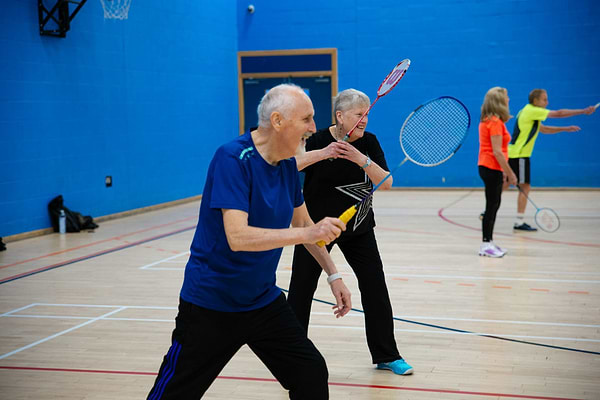
Is badminton good exercise? The short and the long answer
Yes, and not just for elite players. Social badminton keeps you moving almost continuously: there is very little standing around, because the shuttle is light and fast and a point can turn on a single dash to the net. That constant motion raises your heart rate and keeps it there, the core ingredient of any good cardio session. Push into competitive singles and the demands climb sharply, with top players covering several kilometres of court in quick bursts and heart rates near their maximum. You do not need to play at that level to feel the benefit, but it shows how much headroom the sport has.
What makes badminton stand out is the sheer variety of movement. In a single rally you might split-step, lunge low for a net shot, recover, then spring up for an overhead. That mix of forwards, backwards and sideways work, combined with the quick reactions the shuttle demands, trains your body in a way that plodding on a treadmill simply does not. It is also why the right footwear matters so much; a glance at our shoes buying guide explains why running trainers are not built for it.
What type of exercise is badminton?
Badminton is best thought of as interval exercise, a blend of aerobic and anaerobic work. The rallies are short and sharp, usually a few seconds of flat-out effort that draws on your anaerobic system much like a sprint, and the gaps between points let you partially recover before the next burst. Repeat that for an hour and you have something close to high-intensity interval training, except dressed up as a game you actually want to keep playing.
Because your heart and lungs are working hard across the whole session, badminton is also genuinely aerobic and a strong cardio workout. Over weeks and months that steady demand builds cardiovascular fitness, the kind that makes stairs feel easier and leaves you less puffed in everyday life. If you have wondered whether badminton counts as cardio, the honest answer is that it is one of the more enjoyable forms of it, precisely because the effort is broken up and disguised by the rhythm of the match.
How many calories does badminton burn?
Calorie burn depends on your weight and, above all, how hard you play, so treat any single figure with caution. As a rough guide, a casual knockabout burns around 250 to 350 calories an hour for most adults, while fast, competitive play can push past 450 to 500. Singles tends to burn more than doubles, because you cover the whole court yourself with no partner to share the load.
The useful point is the comparison: a brisk hour of badminton sits comfortably alongside jogging or cycling in energy terms, yet rarely feels like a slog because your attention is on the shuttle rather than the clock. That is a big part of why people stick with it, and consistency is what moves the needle on fitness.
Is badminton good for weight loss?
Badminton can be a real help with weight loss and weight management. Burning a few hundred calories a session adds up over a week, the interval nature of the sport keeps your metabolism ticking over after you have left the court, and it builds the leg and core strength that supports an active lifestyle.
That said, no sport outruns a poor diet on its own. The most reliable approach is to pair regular play with sensible eating, and to play often enough that it becomes a habit. Two or three intent sessions a week will do far more for your fitness than the occasional heroic match followed by a fortnight on the sofa. Badminton makes that consistency easy because it is sociable and fun, exactly the sort of exercise people keep coming back to.
The wider health benefits of playing badminton
The fitness case is only part of the story. Badminton is a weight-bearing sport, so the lunging and jumping helps maintain bone density and leg strength, which matters more as we get older. Constantly tracking a fast-moving shuttle sharpens hand-eye coordination, balance and reaction time, qualities that carry over into daily life and other sports.
There is a mental side too. Like most aerobic exercise, a good session is a reliable way to blow off stress, and the focus a rally demands leaves little room for the day's worries. Add the social element of a club night or a regular doubles pairing, and you have a sport that looks after your mood as well as your heart. It is also wonderfully age-friendly: you can start as a child or take it up in retirement, dialling the intensity up or down to suit the day.
Getting started the right way
If this has convinced you to pick up a racket, a little care at the start goes a long way, mostly around your feet. Badminton involves sudden stops and sideways lunges on a slick indoor floor, so the single most important bit of kit is a pair of non-marking court shoes with proper grip and support. Ordinary running trainers are built to roll you forwards, not to brace you sideways, and are a common cause of slips and turned ankles, so get yourself a proper court shoe before your first real session.
Beyond that, keep it simple. A light, forgiving racket makes the game more enjoyable while you find your feet, and our guide to choosing your first racket walks you through weight, balance and flex without the jargon. Some breathable clothing keeps you comfortable, and do give yourself a warm-up: a few minutes of gentle movement and shoulder and leg mobility will protect you from the twinges that catch out keen beginners. Do that, play regularly, and badminton will quietly get you fitter while you are busy trying to win the next rally.
The bottom line
So, is badminton good exercise? Without question. It is a full-body cardio workout wrapped up as a game: it burns calories at a healthy clip, supports weight loss when paired with good habits, and builds strength, coordination and a clearer head along the way. Few sports give back so much while feeling so little like exercise, which may be the best recommendation of all.


