
How to Play Badminton Doubles: Positioning, Rotation and Winning Tactics
Walk into almost any UK sports hall on a club night and you will see the same thing: four players a side of the net, shuttles flying flat and fast, and a great deal of laughter. Doubles is the format most of us actually play. It is quicker than singles, kinder on the legs and far more sociable, yet it hides a surprising amount of tactics. Two players do not simply cover half the court each. They move as a pair, constantly swapping shape depending on who is attacking and who is defending.
If you have ever finished a doubles game feeling like you and your partner kept bumping into each other, or leaving huge gaps in the middle, this guide is for you. Learning a handful of simple positioning ideas will do more for your results than any new piece of kit. Once the shape clicks, you can always sharpen the detail with some coached doubles tactics and positioning videos and a bit of dedicated footwork practice.
Why doubles feels so different from singles
In singles you own the whole court, so the game is about patience and moving your opponent corner to corner. Doubles flips that on its head. With two players covering the same space, the rallies are far flatter and faster, and points are often won or lost in a single sharp exchange at the net. There is very little time to think, which is why having an agreed shape with your partner matters so much. Good doubles is less about individual brilliance and more about two people always knowing where the other one is.
The two shapes: attack and defence
Here is the single most important idea in the whole sport of doubles. At any moment, your pair is in one of two shapes, and the shape depends entirely on whether you are hitting down or being forced to lift.
Attacking (front and back). When your side is hitting downwards, smashing, tapping and pushing the shuttle down, you line up one player at the front and one at the back. The rear player hits the powerful shots; the front player, sitting near the net, kills anything that pops up. This diagonal, one-behind-the-other shape lets you keep the pressure on and finish rallies quickly.
Defending (side by side). The moment you are forced to lift the shuttle up, your opponents can now hit down at you, so you switch to standing side by side, each player guarding one half of the court. This flat, level shape gives you the best chance of digging out a smash and turning defence back into attack.
Attack goes front and back. Defence goes side by side. If you remember nothing else, remember that. Almost every clever bit of doubles play is just a pair moving smoothly between these two positions.
How to rotate in badminton doubles
Rotation simply means changing shape as the rally changes, and it is where most club pairs come unstuck. The trigger is the shuttle. When your side lifts, both players slide into a side-by-side defensive line. When you win the attack back and start hitting down again, one player pushes forward to the net and the other drops back to hit, reforming the front-and-back shape.
The bit people forget is that rotation is often sideways or circular, not a straight swap. Picture your partner at the back smashing down the left side while you cover the front left. If the return drags them across to the right, you do not stand still: you rotate round with them so you are always in front of the player who is hitting. Think of the two of you as joined by an invisible pole, turning together rather than crossing over awkwardly. Smooth footwork makes this far easier, which is why a little time on movement patterns pays off in every game.
A simple rule for who goes where
Whoever plays the lift or the net shot that forces the opponents up should move to the front, because they are already closest to the net. Their partner covers the back. It sounds obvious, but calling it out loud ("mine", "yours", "up") removes the split-second hesitation that lets easy points slip away.
Serving and returning: where doubles points begin
Because the doubles service court is shorter and wider, the low serve is king. The aim is to float the shuttle just over the net so it drops right onto the front service line, giving your opponent nothing to attack. Mix in the occasional flick serve to the back to keep them honest, but the low serve should be your bread and butter. It is well worth getting comfortable with the serving rules and tactics so your serve is both legal and hard to punish.
Returning serve is just as important. Stand ready to move forwards, racket up, and try to take the shuttle early and push it down or flat rather than lifting. Every time you are tempted to lift on the return, remember you are handing your opponents the attack and forcing your own pair into defence.
How to defend a smash
When the smash is coming, resist the urge to swing hard. From your side-by-side defensive stance, keep the racket in front of your body and use a compact, relaxed block. You have two good replies: a soft block into the net that forces the attackers to lift, or a flat drive back through the middle. Both aim to do the same thing, which is to stop your opponents hitting down and win the attack back for your pair. Panicked, wild swings send the shuttle high, and up goes the shape into defence again.
Simple habits that win club doubles
You do not need professional reflexes to climb your club ladder. A few reliable habits will do it. Talk to your partner constantly, even just short calls. Never both chase the same shuttle; trust your half and let your partner own theirs. Keep your returns low whenever you can, because whoever is forced to lift first usually loses the rally. And return to a sensible base after every shot rather than admiring your last one.
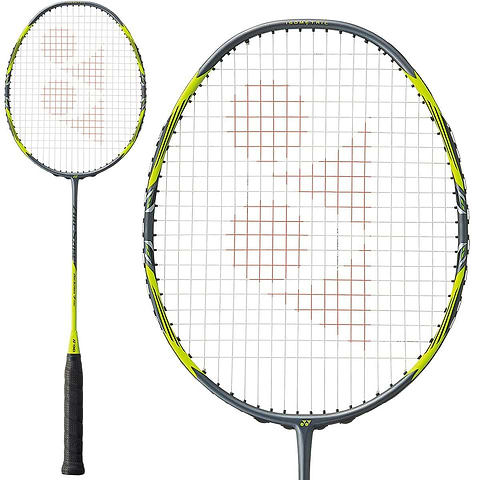
Kit plays a quiet supporting role too. Many doubles specialists prefer a slightly faster, more manageable racket for those rapid net exchanges, and it is worth reading a racket buying guide before you upgrade, or simply browsing the full range of badminton rackets to see what suits your game. And because doubles asks for sharp, sudden changes of direction, a proper pair of indoor court shoes will protect your ankles far better than running trainers ever could.
Putting it all together
Doubles rewards partnership over power. Get the two shapes right, attack from front and back, defend side by side, rotate with the shuttle rather than against it, and you will win rallies you used to lose. Keep your serves and returns low, talk early and often, and let the tactics do the heavy lifting. Best of all, none of this fades: the shapes that work on a Tuesday club night are the very same ones the world's best pairs use under the lights.


